Cost-effective CO₂ capture, powered by your waste heat.
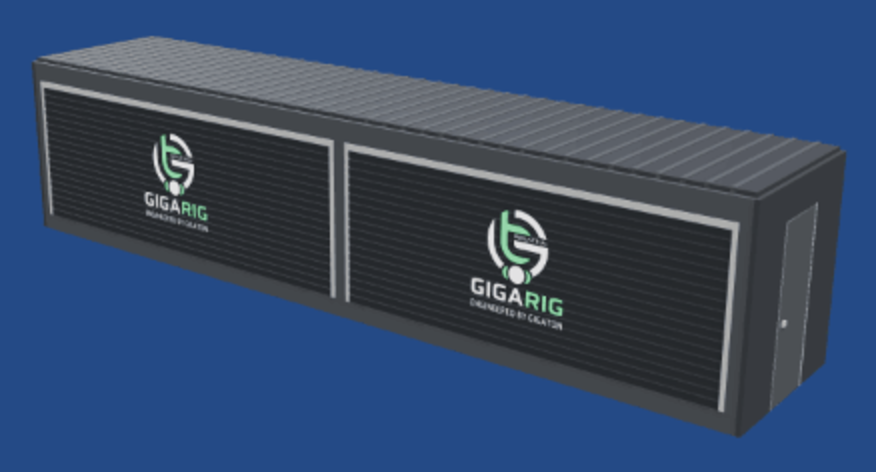
Factory built and delivered as a containerised 40 ft module. GIGARIG is a solid sorbent capture module that needs no steam, no chemicals, no process water and no specialist staff.
Capture that runs on exhaust waste heat.
GIGARIG is a self contained capture module that pulls CO₂ from hot flue gas and regenerates on the site’s own waste heat. No steam, no chemicals, no process water, no specialist crew.
That’s what opens up the sites conventional capture can’t reach: waste-to-energy, biomass, oil & gas, shipping and data-centre power, anywhere with a hot, CO₂-rich exhaust stream. One standard capture module, ships on a flatbed, scales a module at a time.
The design basis, in numbers.
Capture cost is estimated to be between £20-£30 a tonne. This excludes compression and storage and is based on sufficient waste heat availability.
3-30% CO₂. One capture module.
Drag to see where your flue gas sits, and which sectors it maps to.
A clean split of responsibilities.
Scale a module at a time.
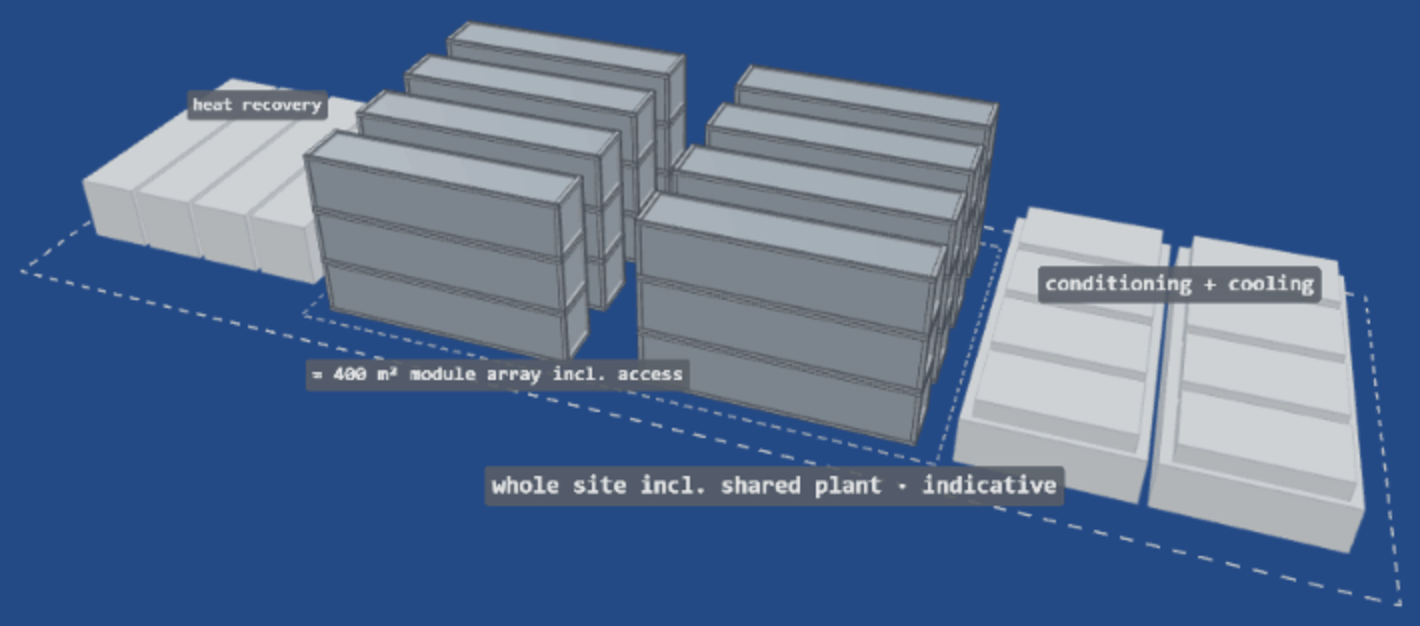
Each module runs independently, capturing roughly 15-20 tonnes of CO₂ a day. Reach any target by adding identical modules: no redesign, no new infrastructure beyond the utility connections. The site matched heat recovery and conditioning skids are shared infrastructure: the first module carries them one-for-one, and their share per module falls as the array grows.
Capacity scales with demand: start with one and add modules as targets tighten, with no upfront over-build.Shown: capture modules plus indicative shared plant. Heat recovery, conditioning and cooling are site specific.Higher capacity format under development for larger systems.
Waste heat does the work.
Regeneration runs on waste heat at 300-400 °C, the band most industrial exhausts already sit in. No steam circuit, no vacuum train, no chemical make-up.
Gas turbines, cement kilns, glass furnaces, marine engines and process boilers all vent heat in or near this range, so the energy to run capture is often already on site.
Capture, not compression.
Turning a flue stack exhaust output into permanently stored CO₂ takes three stages: capture, compression, then transport/storage. They are separate industries with separate operators. GIGARIG does the capture step.
Compression is mature and off-the-shelf, and CO₂ transport and storage networks are being built as shared infrastructure across the UK, Europe and Scandinavia. The missing piece for most emitters is affordable capture: getting the CO₂ out of the flue gas in the first place.
We hand over concentrated CO₂ at atmospheric pressure and below 50 °C. Compression, transport and storage are specified separately, and we are happy to advise.
Where GIGARIG fits.
Waste-to-Energy
Capture from incineration flue gas at £20-30/t, powered by heat the plant already produces. Start partial, add modules as exposure grows.
View market →Biomass & BECCS
Biogenic CO₂ captured at £20-30/t on the plant's own waste heat. Stored, it counts as removal where certification recognises it.
View market →Oil & Gas
Dry atmospheric capture on turbine exhaust offshore. Crew maintainable over field life. The same skid suits platform supply vessels.
View market →Data Centres
Behind the meter gas capture on the turbine's own exhaust heat: low parasitic load, net water positive. Containerised to match how the power is built.
View market →Shipping
Dry, chemical free, atmospheric: built for the marine environment. Runs on engine waste heat, with maintenance an engine room crew can own.
View market →Refining
Modular capture at individual fired-heater stacks: no central plant, no site-wide ductwork. Deploy heater by heater during turnarounds.
View market →A small team of engineers.
We started Gigaton CO₂ in 2022 because we felt that carbon capture shouldn’t need a large chemical plant, or land as a heavy cost on the emitter. Our mission is to change that and to provide CO₂ capture that most industrial sites can afford to install and run.
The team brings 25+ years across environmental technology commercialisation, industrial chemistry R&D, and marine systems engineering.
Engineering validation complete. Field trials next.
Lab testing and engineering validation complete: sorbent performance, thermal cycling and energy use all validated against our engineering model. That puts us at TRL 5, with the module’s structural design now in review with our fabrication engineers.
Next: a full-scale prototype goes into field trials on live flue gas at a biomass site across Q4 2026 to Q1 2027, validating the model against real-world performance and taking us to TRL 6-7. Commercial units follow.
Let’s talk about your site.
Modular CO₂ capture that runs on the waste heat you already have: roughly £20-£30/t, shipped on a truck, with no chemicals or specialist staff. Whether it’s a single module or a full site, we’d love to hear what you’re working with, and we really look forward to hearing from you.
info [at] gigatonco2.com