
Application
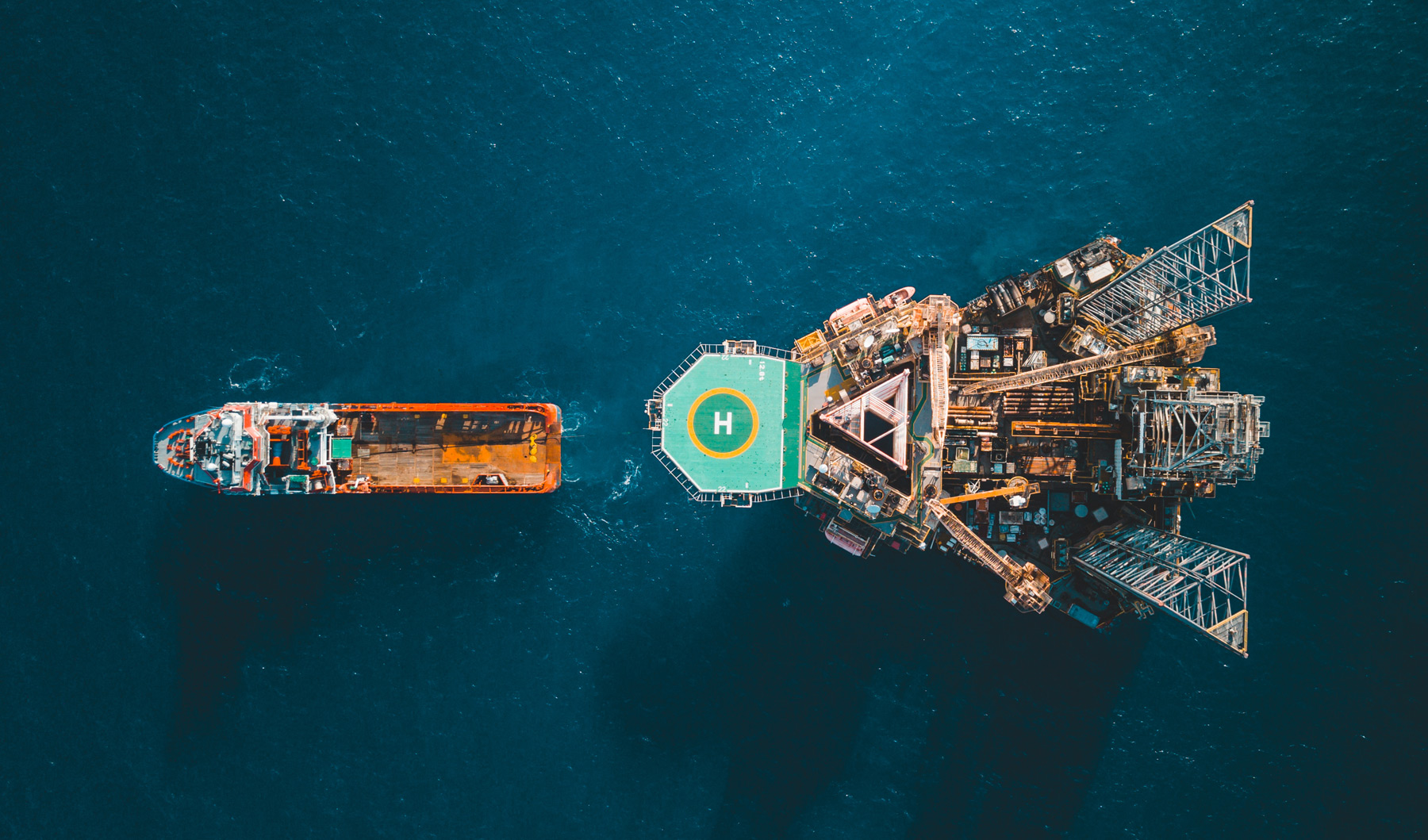
Gigaton CO2's technologies are ideally suited for a wide range of offshore applications, particularly in the maritime and energy sectors where conventional carbon reduction solutions face significant challenges.

Maritime Shipping
The global merchant fleet produces 940 million tonnes of CO2 annually and faces increasingly stringent IMO regulations, requiring 40% emissions reduction by 2030. Our fossil fuel capture technology:
- Fits within the limited space available on vessels
- Functions effectively despite constant vibration and motion
- Withstands corrosive saltwater environments
- Maintains operational efficiency without imposing fuel penalties
- Can be retrofitted to existing vessels or integrated into new builds
By enabling vessels to capture and store CO2 from their exhaust, we provide a compliance pathway that preserves operational viability while meeting regulatory requirements.
Offshore Energy Installations
North Sea platforms subject to the UK ETS carbon pricing mechanism require emissions reduction technologies tailored to their unique environment:
- Enhanced Oil Recovery (EOR): CO2 captured from platforms or via Direct Water Capture can be used for EOR, increasing production lifetime by up to 20% while reducing carbon footprint by up to 40%.
- Platform Decarbonization: Our compact, resilient capture units enable offshore installations to reduce emissions despite severe space and weight restrictions.
- Produced Water Treatment: We can process 5 – 7 barrels of produced water per barrel of oil, removing CO2 and restoring pH balance.
- Scale Inhibition: Our technology helps prevent problematic CaCO3 scale formations in production tubing.
Natural Ocean Forces
Our Direct Water Capture systems can leverage ocean dynamics to minimize energy requirements:
- Tidal movements and currents reduce the energy needed to move water through capture systems
- Wave energy can be harvested to power capture operations
- Thermal gradients can be utilized for process optimization
- Offshore deployment accesses deep ocean CO2 storage sites with minimal infrastructure
Integration with CCUS Infrastructure
Offshore applications offer unique advantages for carbon capture, utilization, and storage:
- Proximity to geological storage sites reduces transportation requirements
- Existing offshore pipeline networks can be repurposed for CO2 transport
- Maritime vessels can serve as mobile capture platforms, collecting CO2 during normal operations
- Offshore wind farms can provide renewable power for capture operations during periods of excess generation